Showing posts with label gibsonlespaul. Show all posts

Tuesday, June 08, 2021

2010 Gibson Les Paul Custom Shop LPR5 | Part Two


This post concludes my report on a very rare and lovely 2010 Gibson Les Paul Custom Shop 55 Standard Refinish LPR5. In Part One, we looked at the LPR5's external features. Now, in this episode, we'll get up close and personal with this exemplary specimen of guitarhood.

Let's start with case candy, then. First up is the TonePros Locking Bridge system mini-wrench, which you'll need to unfasten the "TonePros long steel anchors and long locking studs" holding the stopbar tailpiece in place. Then there's a genuine Gibson AIGG-925 Polishing Cloth, which was as yet unopened when received. No, I didn't have the heart to use it.

Documentation-wise, there's a Gibson Gold Warranty, Pre and Final Pack Checklist, Gibson Historic Collection Guarantee Card, various tags, and last but not least; a Gibson Custom Shop Certificate of Authenticity.

On to the pickups now. As mentioned in Part One, the neck pickup is a Burstbucker 1, and the bridge; a Burstbucker 2. According to the Gibson Custom Shop, the BurstBucker 1 "replicates the sounds from Gibson's original Patent Applied For pickups, are slightly underwound," and produce a "medium vintage output." The BurstBucker 2, meanwhile, is wound "in the range of Gibson's '57 Classic; and "slightly hotter" than the BurstBucker 1. Both humbuckers feature "unpolished magnets and non-potted coils, just like the original."

Stuck to the underside of both humbuckers are two rectangular labels. The smaller of the two is black with the words "PATENT APPLIED FOR" in gold font. The larger one is just plain white paper with badly-faded greyish print. Truth be told, I was only able to read the text after a lot of Photoshopping. And so, here is what I managed to decipher:

BurstBucker 1 Neck Humbucker
BB#1
(Wound by PS)
03/26/10 0594

BurstBucker 2 Bridge Humbucker
BB#2
(Wound by PS)
03/17/10 0446

For starters, I'm making an educated guess that "BB#1" is the acronym for "BurstBucker 1" and "BB#2;" "BurstBucker 2." Next, both humbuckers were probably hand-wound by someone with the initials "PS" (Paul Stanley?). I am also fairly certain "03/26/10" refers to the date of manufacture of the neck humbucker; namely March 26th 2010. Likewise, "03/17/10" most likely indicates that the bridge humbucker was manufactured on March 17th 2010. Finally, "0594" and "0446" are most probably batch numbers. What do you think, folks?

The control cavity is unshielded, as per 1955 specs; and houses four full-sized pots hooked up to two "Bumblebee" tone capacitors. The output jack is, thankfully; a genuine US-made Switchcraft #11. Frankly, I was half-expecting to find a Neutrik/Rean NYS229 in there. Two thumbs up to the Gibson Custom Shop for keeping things authentic!

If you have the time, do check out the two audio files I recorded of this 2010 Gibson Les Paul Custom Shop 55 Standard Refinish LPR5 being (i) played clean through a Fender Champion 40, and (ii) overdriven through a Marshall half stack. Thanks for dropping by; and I'll see you again real soon :)


2010 Gibson Les Paul Custom Shop LPR5 | Part One


Hi there! Today we take a good look at a 2010 Gibson Les Paul Custom Shop 55 Standard Refinish LPR5. According to the Gibson Custom Shop, this particular guitar ".. is an extremely rare prototype." Still listed, but marked as sold on Reverb, it's now owned by a mild-mannered chap named Fizan.

The LPR5 came into the shop for a string change and setup a few months ago, and I wasted no time in taking lots of pictures to share with you. I've also managed to record audio of this 2010 Gibson Les Paul Custom Shop 55 Standard Refinish LPR5 being played clean through a Fender Champion 40, and overdriven through a Marshall half stack. Do give both recordings a listen if you will.

In this post (Part One), I'll share with you the main features of the guitar without taking it apart. Next, in Part Two; we'll get to see what's actually inside. With that, it's time to highlight some specs. Although most of the information presented is straight off the Reverb listing; I have also added a few observations of my own.

  • Also known as: Gibson Custom Shop LPR5
  • Made by the Gibson Custom Shop
  • Issued in 2010
  • Comes with a Gibson Custom Shop OHSC
  • Serial Number is "Proto #1"
  • Weight is about 8 lbs 8 oz
  • Mahogany Body and Neck
  • Maple Top finished in "Rich Amber Sunburst"
  • 24-3/4” Scale
  • Set-In Neck Joint
  • BurstBucker 1 Neck Humbucker
  • BurstBucker 2 Bridge Humbucker
  • Soft Shoulder '55 Neck Profile
  • Bound Rosewood Fretboard
  • 12” Radius, 22 Frets
  • 1-11/16" Nut Width
  • ABR-1 Tune-O-Matic Bridge
  • Stop Bar Tailpiece
  • TonePros Locking Bridge System
  • 2 Volume/2 Tone Controls
  • 2 Bumblebee Tone Capacitors
  • 3-Way Pickup Selector
  • Switchcraft #11 Output Jack Socket
  • Kluson "Gibson Deluxe" Tuners
  • Nickel Hardware
  • Gold Bell Knobs with Knob Pointers
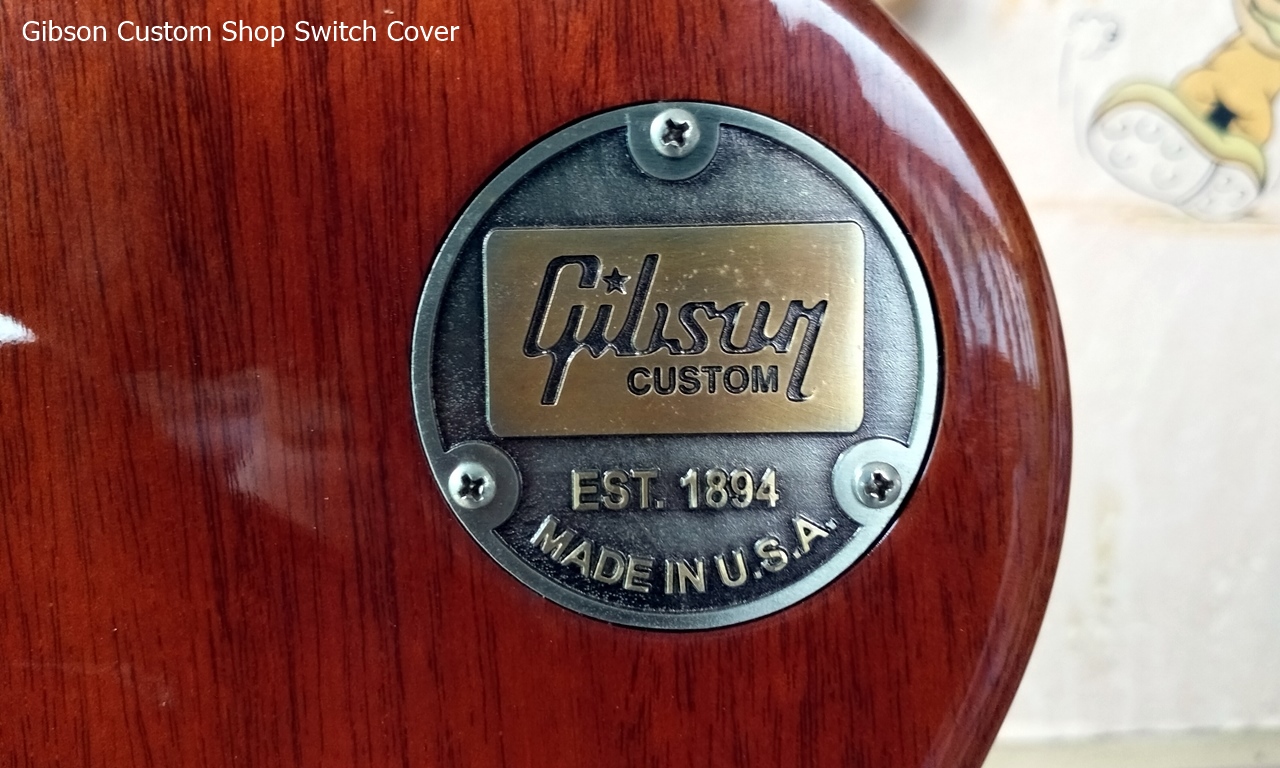
  • Engraved metal "Gibson Custom" toggle switch cover


Monday, January 04, 2021

Gibson Les Paul Studio 2015: Part Three

Related Posts 
Part One | Part Two | Part Three

This is the third and final instalment of a three-part series on a Manhattan Midnight Gibson Les Paul Studio 2015. For detailed specs on this guitar, kindly visit the Gibson Legacy Archive.

As this post features pics of the guitar after servicing, cleaning, and a full setup; we'll take a brief look at some of its outstanding features. Most striking is the gorgeous B Grade Maple top stained in what Gibson terms "Manhattan Midnight;" and finished in lacquer. I particularly love the way the dark blue stain accentuates the "tiger stripes" of the maple top.

Then, there's the attractive silkscreened gold "Les Paul 100" lettering on the headstock front [apparently in the legend's own handwriting]; which celebrates "100 years of Les Paul's innovation." Less impressive is the gold ink "Gibson" logo. An inlaid logo [perhaps of golden mother-of-pearl] would have been more appropriate for an instrument of this pedigree; in my humble opinion. 

Meanwhile, on the back of the headstock, we are greeted by a beautiful hologram depicting a smiling Les Paul waving at us. The hologram also features the man's 100th birthday signature, which, according to Gibson; is "a facsimile of his actual signature taken from a pickguard autographed by Les."

Looking at the nice and dark rosewood fretboard, one's eyes are drawn to the gorgeous trapezoidal inlays; which are real mother-of-pearl [MOP]. Quite a change from your run-of-the-mill "mother of toilet seat" found on most Pauls; isn't it? 

Yet another eye-catching feature is the rather unique "golden cream" hue of the toggle switch washer and pickup rings; which provides a nice contrast to the darkish "Manhattan Midnight" tiger-striped maple top. Also oozing understated class are the satin nickel-finished Zamak [zinc / aluminum / magnesium / copper alloy] tune-o-matic bridge and stop bar tailpiece; as well as the pale aluminum strap buttons.

Sound-wise, this Gibson Les Paul Studio 2015 is capable of totally-useable humbucking and single-coil tones; both clean and overdriven. Most regrettably, I could not find the time to record a proper sound clip. However, this Guitar Center YouTube video should give you a good idea of what a Manhattan Midnight beauty sounds like. Enjoy :)


Gibson Les Paul Studio 2015: Part Two

Quick Links: Part One | Part Two | Part Three

This is the second instalment of a three-part series on a Manhattan Midnight Gibson Les Paul Studio 2015. For detailed specs on this guitar, kindly visit the Gibson Legacy Archive.

I'd previously removed the stock Gibson G FORCE™ Tuning System and Zero Fret Adjustable Nut, so the headstock was now bereft of any hardware. After preliminary cleaning, I was able to test-fit the replacement tuners. They dropped in easily without any peghole reaming; so all I had to do was drill holes for the mounting screws and fasten the securing nuts.

Besides this, the Zero Fret Adjustable Nut was dismantled down to the screws, scrubbed as clean as possible, polished with Autosol; and lubed. Polished brass is a thing of beauty, I tell you. The rosewood fretboard was also degrimed and reconditioned with lemon oil, and the frets cleaned and polished. 

I did notice that the covers of the "57 Classic" neck and "57 Plus" bridge humbuckers appeared to be brushed steel [actually satin nickel-plated]; which was quite unlike any of the Gibson pickup covers I'd come across so far. These were relatively easy to clean and polish compared to the rest of the body and hardware.

While removing the black "supreme grip" speed knobs, it became obvious that both volume pots were of the push/pull variety; implying that both pickups could be coil-tapped for single-coil tones. Meanwhile, the broken black ABS output jack plate was replaced with one from StewMac, while the whole body, back of the neck and headstock were cleaned and polished with Gibson Pump Guitar Polish. Once everything was spick and span, the Les Paul was put back together again, strung with Ernie Ball Super Slinkys, tuned; and set up for low action and maximum playability.